




Finger Extensions – Nairobi
If you’re dealing with a drooping fingertip, recovering from a finger fracture, or managing a tendon injury, a good finger extensions Nairobi patients trust can provide the precise, targeted support your finger needs to heal correctly.
Also known as a finger extension splint Nairobi residents search for when comparing options online, this splint holds the fingertip joint in an extended position while still allowing the rest of your finger to move naturally.
Below, we’ll walk you through what a finger extension splint does, who it’s typically used for, and how to choose the right size and wear it correctly.
What Is a Finger Extension Splint?
A finger extension splint is a small, precise device designed to immobilize the distal interphalangeal (DIP) joint – the joint closest to the fingertip. It holds this joint in an extended, functional position. People most commonly use it to treat mallet finger, a condition where the fingertip droops downward due to damage to the extensor tendon and cannot straighten on its own.
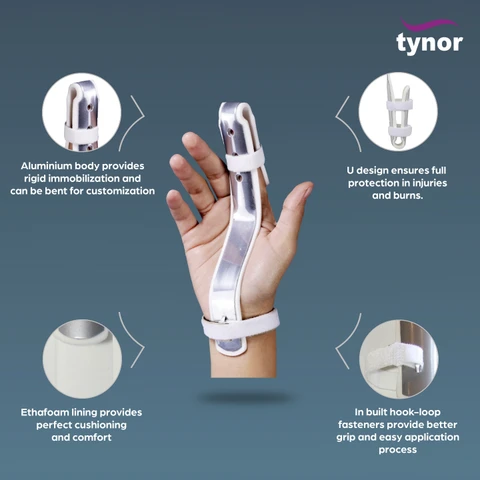
Most finger extension splints, including the ones we carry, feature a malleable, coated aluminum frame with a soft foam lining. You can gently shape this frame to fit the exact contour of your finger. Hook-and-loop (Velcro) fasteners keep it securely in place. The design specifically allows the PIP joint – the middle joint of the finger to move freely, so only the fingertip itself stays immobilized.
Who Should Use a Finger Extension Splint
A finger extension splint addresses a specific but common set of finger injuries and conditions.
1. For mallet finger
This is the most common reason people search for a finger splint for mallet finger Nairobi wide. By holding the DIP joint in extension, the splint allows the damaged extensor tendon to heal properly. Over time, this gradually restores the finger’s ability to straighten on its own.
2. For boutonniere deformity
This condition involves a bent middle joint and an overextended fingertip joint. It often results from an injury to the tendon at the middle knuckle. A finger extension splint helps realign the joints, supporting proper healing and improved finger function over time.
3. For extensor tendon injuries
If you’re recovering from damage to the extensor tendon more generally, a finger splint for tendon injury Nairobi doctors commonly recommend helps stabilize the area. Consequently, it reduces the risk of re-injury and supports optimal healing.
4. For minor fractures
A finger splint for fracture Nairobi wide is often used to support minor finger fractures. It keeps the joint properly positioned while the bone heals.
5. For post-surgical support
Following certain finger surgeries, a doctor may prescribe a splint to protect and support the area during the initial stages of healing.
The exact positioning, wear duration, and follow-up care depend heavily on the specific injury. Therefore, it’s important to have your finger properly assessed by a doctor before starting to use the splint. Additionally, follow their specific guidance throughout your recovery. This is particularly important for mallet finger, where continuous wear over several weeks is often required for the tendon to heal correctly.
How to Choose the Right Size and Wear It Correctly
Finger extension splints typically come in a few standard sizes based on finger length. Getting the right size matters for both comfort and effectiveness.
Small – suited to shorter fingers, roughly 5.9cm in length.
Medium – suited to average finger lengths, roughly 7cm.
Large – suited to longer fingers, roughly 7.6cm.
Here are a few tips for correct use:
1. The splint should hold your fingertip in a straight, extended position without feeling painfully tight.
2. Check regularly that your finger stays warm and maintains normal color. This is a sign that circulation isn’t being restricted. If you notice coldness, numbness, or discoloration, loosen the splint and check in with a healthcare provider.
3. For conditions like mallet finger, doctors often advise wearing the splint continuously including while washing your hands for several weeks. Ask your doctor for specific guidance on how and when you can remove it.
4. Keep an eye out for any skin irritation or discomfort at contact points. Follow up with your healthcare provider if the fit needs adjusting as healing progresses.
Why Buy From Us
We’ve made ordering a finger extension splint online simple and reliable:
1. Fast, local delivery
We offer same-day finger splint delivery Nairobi wide, including Karen, Nairobi West, Mombasa Road, and surrounding areas. You get the support you need without delay.
2. Fair, transparent pricing
Our finger splint price Nairobi customers see online is clear from the start. We don’t include hidden costs.
3. A simple way to buy online
Order your finger immobilizer Nairobi wide from home. Choose your size with confidence using our sizing guidance above. We’ll deliver it without the hassle of visiting multiple pharmacies.
Order Your Finger Extension Splint Today
Whether you’re managing mallet finger, a tendon injury, or recovering from a fracture, a quality finger extensions Nairobi residents trust offers the precise, targeted support your finger needs to heal properly.
Choose your size, place your order, and get it delivered fast – right to your door in Karen, Nairobi West, Mombasa Road, and beyond.
Buy Your Finger Extension Splint NowFrequently Asked Questions
What is a finger extension splint used for?
This splint primarily treats mallet finger, boutonniere deformity, extensor tendon injuries, minor finger fractures, and provides post-surgical support. It holds the fingertip joint in an extended position to support proper healing.
How long should I wear a finger extension splint?
This depends on your specific condition. Mallet finger often requires continuous wear for 6 to 8 weeks. However, your doctor will give you specific guidance based on your injury and healing progress.
Can I still move the rest of my finger while wearing it?
Yes, the splint immobilizes only the fingertip (DIP) joint. Your middle joint (PIP) can move freely.
What size finger extension splint should I buy?
Sizing is based on finger length – small (5.9cm), medium (7cm), and large (7.6cm). Reach out to us if you’re unsure which size fits your finger.
